


Two ponds a mile apart can need different fountains, and many owners never hear that before buying. The unit in the product photo looked great, so it went in. A season later, the pond hasn’t changed much. A floating pond fountain delivers far more when its design fits the job the pond has.
Fountains now come in real variety. Some are built as showpieces, with layered sprays that catch the sunlight. Others move a heavy volume of water to keep the pond oxygenated. The right floating pond fountain gives your property a centerpiece that fits its style and keeps the water clearer from spring through fall.
Choosing between them starts with what the pond actually needs. A formal garden pond by the patio has different demands than a two-acre irrigation pond behind a barn. Decorative units reward the eye first. Aerating pond fountains put water movement ahead of pattern, which matters where algae or fish health is on your mind.
What the Wrong Fountain Costs over Time
- Why Horsepower Ratings Mislead Buyers: Horsepower describes the motor, while net flow rate, the volume of water a fountain pushes into the air, shows real performance and aeration. Some discount fountains are advertised as 1 HP while the pump may deliver only about one-third horsepower of output. A tall, narrow plume can hide the same weakness. Net Flow Rate is determined by the maximum flow rate of the pump and the kind of nozzle, or propeller, used. A nozzle with tiny holes produces tall and wide displays, but flow rate is reduced by the small size of the nozzle’s holes.
- The Cost of Waiting on Weak Circulation: A fountain that barely circulates the pond lets organic sludge build on the bottom as leaves and dead algae settle. In everyday field practice, pond service technicians routinely see owners who bought for looks and still fought green water every August. Options narrow with time, and the fix can grow into dredging, which costs far more.
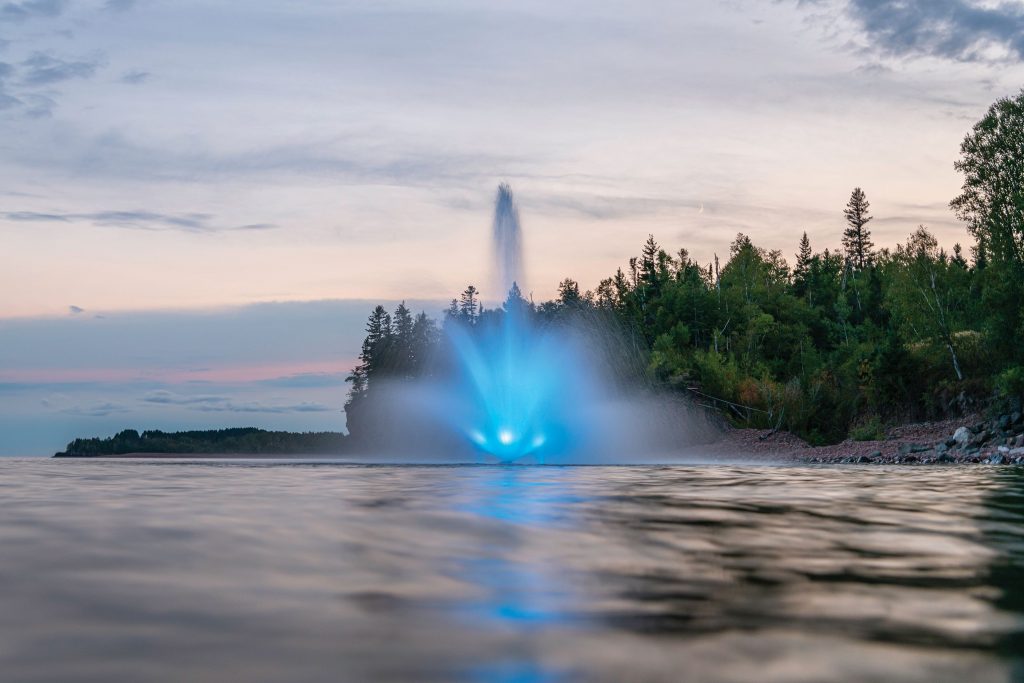
Decorative versus Aerating Fountains Compared
- Decorative Fountains for Detailed Displays: Decorative models give you the widest choice of display, with tiered and multi-stream patterns made for viewing from a deck or clubhouse. The trade-off is water volume. Shaping water into detailed forms takes pressure, so these units move fewer gallons than an aerating model of similar size. In a small ornamental pond, that rarely matters.
- Aerating Fountains Built to Move More Water: Aerating models throw a lower, wider spray that moves far more water through the air every minute. Aerating fountains use propellers instead of nozzles, so more water is pushed into the atmosphere, where it catches oxygen, and falls back into the pond. Each droplet adds contact between water and air, and that gas exchange lets oxygen in while carbon dioxide escapes. Fish handle hot nights better. A very deep pond benefits from a subsurface aerator working the bottom layer.
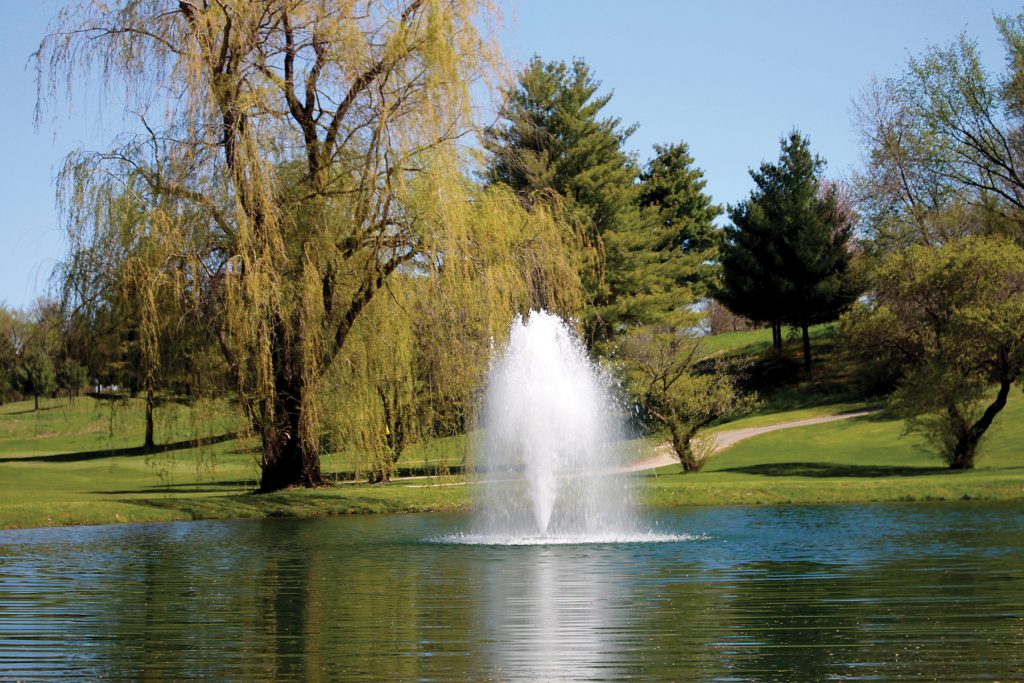
Nozzle Patterns and the Moods They Create
- Geyser and Tiered Patterns for Height: A geyser nozzle sends a solid column straight up that stays visible from far across a large pond. Tiered and crown patterns stack rings of spray at different heights. Add underwater lights and those layers hold attention long after sunset. On a windy site, a tall spray can drift onto docks and walkways.
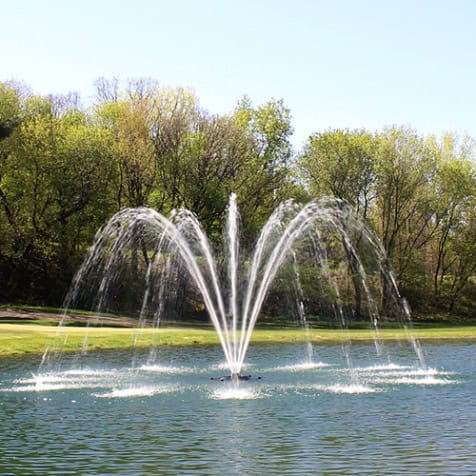
- Wide Spray Patterns for Windy Sites: Low, wide patterns such as V-shapes and trumpets spread water across more surface and hold up better in wind. A floating pond fountain fitted with an interchangeable nozzle kit lets you trade a wide summer spray for a showier pattern before a wedding or open house, without buying a second unit.
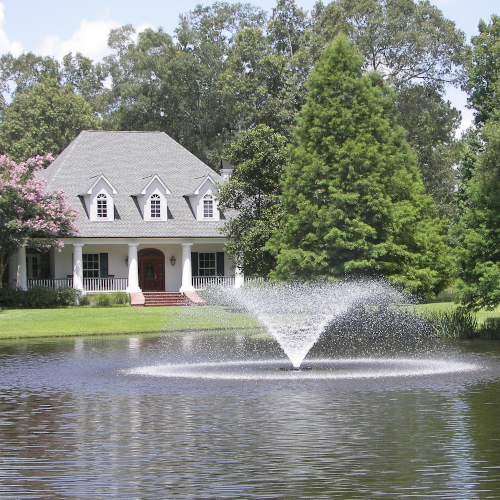
Matching Fountain Style to Pond Purpose
- Decorative and Recreational Ponds at Home: A backyard pond kept for its looks suits a decorative pattern sized to the view from the house. Interior designers who follow biophilic design favor moving water that can be seen and heard from inside the home. Recreational ponds stocked for fishing lean the other way, and clean, oxygenated water matters more there than any pattern.
- Commercial and Larger Outdoor Settings: Hotel grounds and golf course lakes need a fountain that reads well from a distance and runs all season with little attention. A floating pond fountain with strong net flow and a corrosion-resistant build protects curb appeal and helps keep the water clean. Stainless parts cost more upfront and less over the years.
Signs Your Pond Needs a Different Fountain
- Early Warning Signs from the Shoreline: A pond ready for a different fountain shows it in the water and the fish well before any pump fails. Catching the signs early leaves you more options and a smaller bill. Most are easy to spot on a summer morning, when oxygen in the water sits at its daily low.
- Green water that returns every summer points to weak circulation.
- Fish gulping at the surface near dawn need more oxygen.
- Sulfur smells along the bank mean muck is building faster than it breaks down.
- If nobody notices the spray from the patio, the pattern is wrong for the viewing distance.
- A floating pond fountain sized by net flow instead of horsepower gives the pond steady circulation and the display you pictured.
Letting the Water Take Center Stage
The right fountain pays you back twice, once in how the property looks and again in how the pond holds up through the hottest weeks. Waiting another season costs more than it seems. Muck keeps settling while you wait, and the eventual fix grows with each summer the water sits still.
Book a fountain consultation today and find the right match for your pond’s size and purpose.
Frequently Asked Questions
A floating fountain needs enough depth to keep its intake well above bottom sediment, and each model lists its own minimum. Larger, high-flow units need more water beneath them, so compare that figure with the shallowest spot where the fountain will sit. As a general rule, shallow ponds should opt for Kasco fountains, as these require the least depth.
A decorative fountain adds some oxygen where its spray meets the surface, but it moves less water than an aerating model. It suits small ponds with light fish loads, while deeper ponds do better with an aerating pattern or a subsurface aerator.
Many floating fountains accept interchangeable nozzles that attach at the float, so the pattern can be swapped without replacing the pump. Each nozzle changes spray height and water volume, and the new pattern should still match how much circulation the pond needs. Note: since aerating fountains use propellers and not nozzles, these fountains are limited to one display pattern: the V shape.
In mild climates, a floating fountain can run year-round, and many owners leave it on around the clock in summer because oxygen drops overnight. Where ponds freeze, most manufacturers recommend pulling the unit before ice forms, since ice can damage the float and power cord. The exception is Scott fountains, which can be left out in icy weather.