

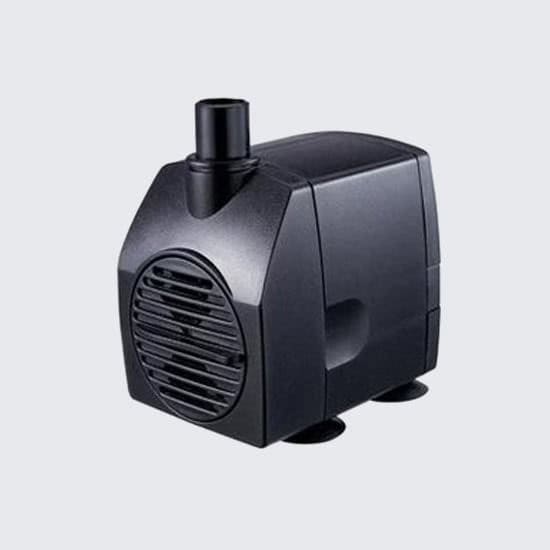
Picture a small stone bowl on a sunny patio, humming along on Friday and making a dry, rattling gurgle by Sunday afternoon. Nothing broke on its own. The water dropped below the pump’s top, and the motor kept running without the cooling it relies on. A small fountain pump can handle plenty, but shallow water is most likely to shorten its working life. So how much water is enough, and how can you tell before the damage starts?
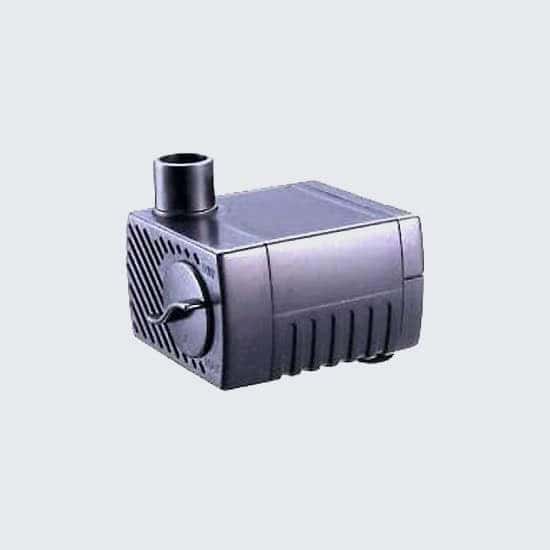
Let’s break it down. No single depth fits every setup, because pumps come in different heights. A tiny tabletop model might stand about 1.25 inches tall. A small pump for fountain bowls rated at 130 GPH sits closer to 2.5 inches. The safe depth starts with the pump you own, not the bowl you bought.
Why a Small Pump for Fountain Use Must Stay Fully Underwater
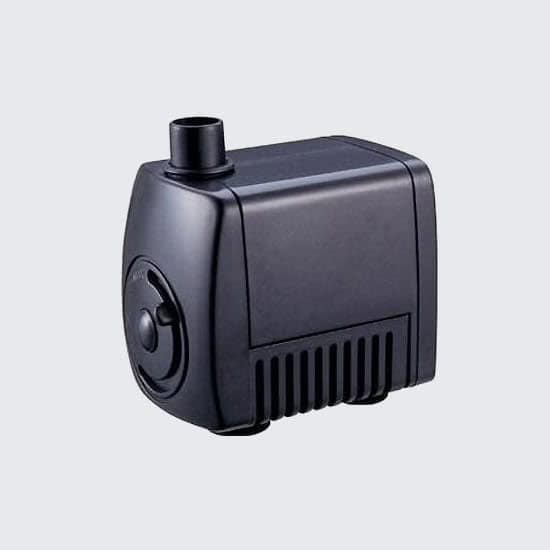
Here is why. Most compact fountain pumps rely on the surrounding water to stay cool. Manuals for these models say to run the pump fully submerged and never let it run dry. Once the waterline slips below the housing, heat builds inside the motor with nowhere to go.
The cost of getting this wrong is clear. Roughly 95 percent of pump burnouts trace back to owners letting the pump run dry. After a water-cooled motor overheats like that, the only fix is usually a new pump. Nobody enjoys paying twice for the same small job.
Partial cover isn’t much safer for a small pump in fountain setups. One pond equipment maker explains that running dry can also mean a pump starved by a clogged intake, even when the basin looks full. That starvation can heat up and warp internal ceramic bearings and plastic bearing housings. A fully covered pump, by contrast, tends to run quieter and steadier, which is the whole point of a fountain.
Warning Signs Your Fountain Water Is Getting Too Shallow
How do you know the level has already slipped too far? The pump usually gives you a few clues first. Watch and listen for these:
- A gurgling or slurping sound from the basin
- Water that spits or pulses instead of flowing in a steady stream
- A spout that looks weaker than it did a few days ago
- A new rattle or buzz from under the water
- The top edge of the pump housing peeking above the surface
One maker’s support guide makes a blunt point here. By the time you hear gurgling, the pump is already at risk. Waiting for that sound, then, probably means waiting too long.
There is a quieter problem too. When water sits only slightly above the intake, suction can spin up a tiny whirlpool that drags air into the pump. Engineers call this a vortex, and deeper water makes it harder for air to reach the intake. Air in the impeller reduces performance and can cause the pump to lose prime.
How to Measure the Minimum Water Depth for a Small Fountain Pump
Here are the next steps. The whole check takes about five minutes and a ruler.
- 1. Unplug the pump and lift it out of the water.
- 2. Measure from its base to the very top of the housing.
- 3. Add at least one inch to that number, or two inches if the fountain sits in sun or wind.
- 4. Note where that height lands on the inside of the basin so you can spot it at a glance.
- 5. Top up the water before it reaches that mark, not after.
With a 2.5-inch pump, that means keeping at least 3.5 inches of water in the basin. A 1.25-inch tabletop pump might get by with 2.25 inches, though a bit more never hurts. Is an extra inch overkill? Maybe on a cool, shaded porch. Probably not on a south-facing deck.
Why Hot, Breezy Days Drain Shallow Fountain Basins Faster
A shallow basin has very little water to spare. The U.S. Geological Survey noted long ago that evaporation speeds up with warmer water, stronger surface winds, and drier air. A fountain then adds its own losses, because spray and splash carry droplets over the rim.
A wide, shallow dish also exposes a lot of surface for the small amount of water it holds. Each sunny hour takes a bigger bite out of its depth than it would from a deep urn. Put those together, and a bowl that looked fine at breakfast can sit low by late afternoon in July.
It sounds dramatic. Mostly, it is just arithmetic. The real trap is a warm weekend away with nobody topping up the water.
Placement Tips That Give Your Fountain Pump More Water Overhead
Small changes in how you set up the pump can buy extra margin.
- Set the pump at the basin’s deepest point, not wherever the cord happens to reach.
- If your pump has a flow control lever, turn it down when the spray splashes past the edge.
- Submerge the pump fully before plugging it in, every time.
- Expect a little trapped air on the first start. Unplug and plug back in until water flows. Clean the intake screen about once a month, since a clogged screen sharply cuts performance.
Here is the slightly awkward part. The same manuals suggest raising the pump slightly when it sits on a dirty surface so grit stays away from the intake. That lift costs you depth, which seems to clash with everything above. On a clean glazed bowl, keep the pump flat on the bottom. On a gritty stone basin, a small lift may still be the better trade, as long as the water covers it with room to spare.
When a Lower-Profile Small Pump for Fountain Bowls Makes More Sense
Sometimes the basin cannot hold enough water for the pump you have. A wide, shallow dish might offer only two inches of depth. Constant refills become a chore, and a shorter pump usually makes more sense.
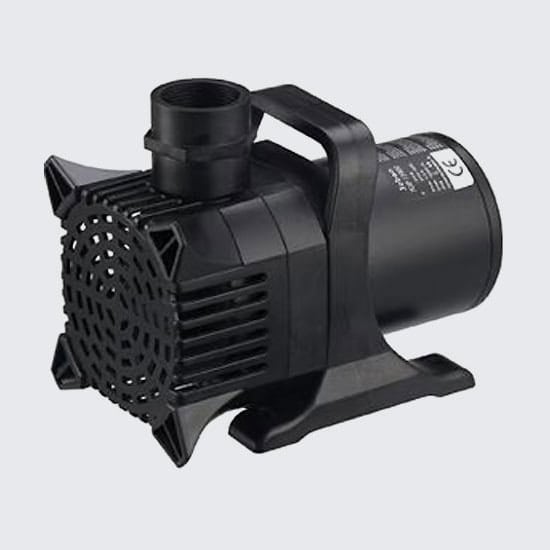
One pump seller’s sizing guide says most small indoor fountain pumps run well between 35 and 150 GPH. Lower-flow models in that range also tend to have smaller bodies, which leaves more water above them. If your spout only needs a gentle bubble, a lighter, small pump for fountain bubblers may solve both the depth and splash problems.
Manuals for compact submersible pumps of this type set two more limits worth checking. Keep the water at 86°F or cooler, and use the pump only in self-contained fountains no larger than five feet in any direction.
Measure Today and Match the Right Fountain Pump
Grab a ruler and measure two things today: your basin depth and your current pump’s height. Then compare those numbers with each small fountain pump on this site. The product pages list each pump’s size and its flow at different heights.
If the gap looks tight, send your measurements through the contact page and get a second opinion before the next warm weekend.
Frequently Asked Questions
Can an Indoor Small Fountain Pump Be Used Outside?
Indoor small pumps often come with 2-prong plugs and thinner cords. Outdoor pumps use 3-prong grounded plugs, and any pump running outside should have a grounded, 3-wire plug.
Does a Small Fountain Pump Need a GFCI Outlet?
Yes. The National Electrical Code calls for GFCI protection on the branch circuit that supplies fountain pumps. A GFCI outlet cuts power quickly if current leaks where it shouldn’t.
What Tubing Size Works With a Small Fountain Pump?
Check the outlet on your pump. A 35 GPH tabletop pump may take 5/16-inch inside-diameter tubing, while a 130 GPH model can accept 5/16- or 1/2-inch. Tubing that is too narrow squeezes the flow, so match the size the pump calls for.
Are Solar Small Fountain Pumps a Good Idea?
They can work where running a cord is hard, though their output can be inconsistent. Solar pumps use a different motor design, and the panel needs enough power to push water up to the spout. Small solar pump kits are available for these setups.
How Should the Cord Run From the Fountain to the Outlet?
Let the cord dip below the outlet before it rises to the plug. This drip loop keeps water running down the cord from reaching the outlet. Never lift or carry the pump by its cord either.