

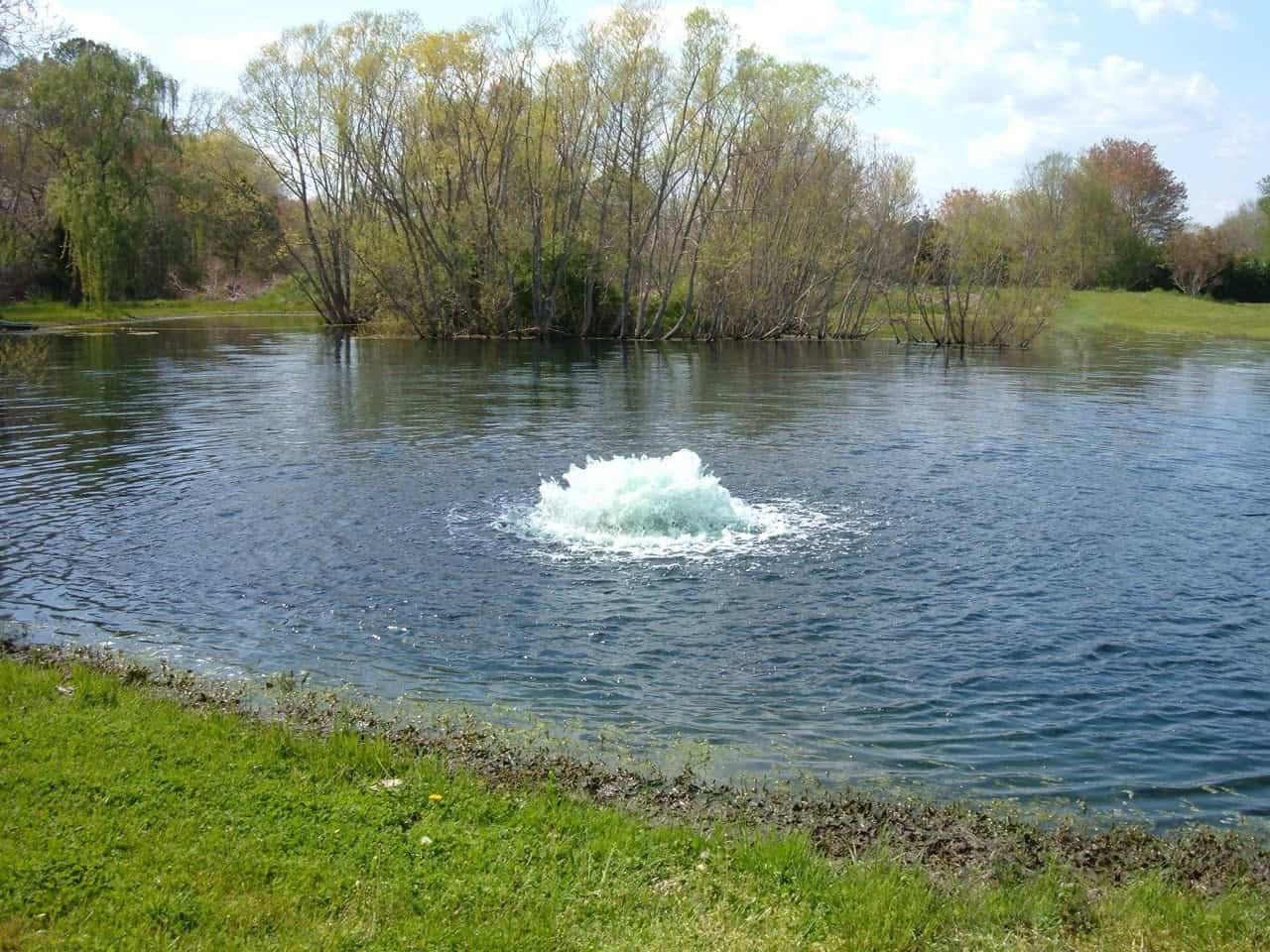
The Lincoln Memorial reflecting pool turned bright green this June, and the photos spread fast. Workers waded in with long vacuums while the water sat the color of pea soup. It looked neglected. It looked costly to fix. Reports put the recent repair bill past 14 million dollars, and crews even resorted to hydrogen peroxide and ozone machines to claw the water back toward clear. That mess gives every pond owner a plain picture of what happens when water sits still in the sun. The fix for your own pond starts with pond aeration, and the reflecting pool shows exactly why.
Here is the part that surprises people. The reflecting pool has battled algae since it opened in 1922, long before any recent paint job. NPR reported that the pool is shallow and stagnant, with full sun and no shade, which a George Mason University aquatic ecologist called excellent conditions for algae growth. A darker new surface made the water warmer, and warm water feeds algae even faster. Your backyard pond may be deeper, but it shares more of those traits than you would guess, which is why pond aeration matters so much.
Why the Reflecting Pool Turned Green Without Pond Aeration
Algae needs sun, warmth, and calm water to spread, and the reflecting pool offers all three at once. The sun reaches the bottom. Heat builds through the day. Nothing stirs the water around. The algae blooms, sometimes within days.

The species that turned the pool green is a common green alga called Desmodesmus, found across the region every summer. It was not toxic in this case. It just looked terrible. The same pattern shows up in private ponds when the weather heats up, and the water goes flat and quiet.
Wind helps a little. A breeze ripples the surface, bringing in some oxygen. Most ponds need more than a breeze can give them. Pond aeration steps in where nature falls short, keeping the water turning so algae cannot settle into a calm, sunny home.
What Pond Aeration Does For Your Pond Water
Water holds oxygen, and your fish breathe it. Warmwater fish like bass and bluegill need around 5 parts per million to stay healthy, according to New Mexico State University. Drop below 3 ppm, and those fish start to die. Oxygen gets into water two ways: from the air at the surface and from plants during daylight. Clemson University notes that dissolved oxygen sits lowest in the early morning, after plants have spent the night using it up.
Now picture a still pond in July. The surface barely trades air with the sky. The bottom turns quiet and cold. Old leaves and muck pile up and rot. Without oxygen, anaerobic bacteria take over and produce hydrogen sulfide, the rotten-egg smell that hangs over a tired pond. That smell is your water telling you it cannot breathe.
Pond aeration breaks that cycle. Moving water pulls oxygen from the surface and carries it throughout the pond. Fish stay active. The bottom stays cleaner. Algae lose the calm they need to spread.
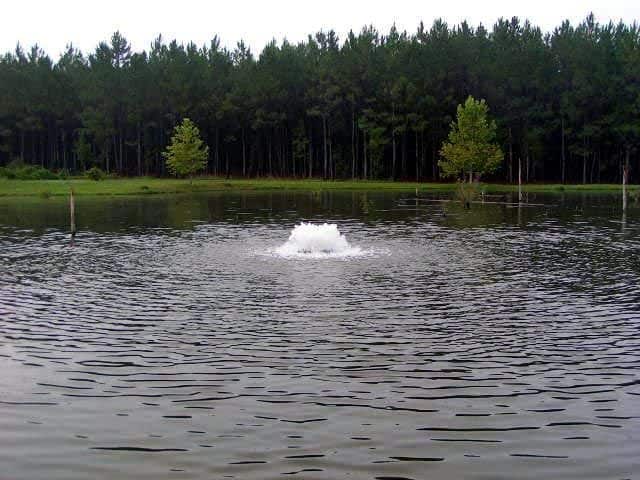
There is a payback beyond the fish, too. Moving water makes a poor home for mosquitoes, which prefer a still surface for laying eggs. Clear, oxygen-rich water also lets you see your fish instead of a green haze. Aeration protects the pond and rewards you with how the water looks every day.
Signs Your Pond Is Running Low On Oxygen
Your pond will warn you before it turns into a green mess. Watch for these:
- Water shifting from clear to cloudy green, often after a hot stretch.
- A film or scum building on the surface
- Fish gulping at the surface in the early morning
- A rotten egg or swampy smell near the water
- Dead fish floating after a hot, calm night.
See two or three of these together, and your pond is short on oxygen. Waiting rarely helps. The bloom thickens, the smell grows, and the cleanup gets harder, which is the same trap that caught the reflecting pool.
How A Floating Fountain Moves Water And Air
A floating fountain is a simple machine that does a hard job. A pump sits under a float that rides on the surface. A nozzle sits on top, connected to the pump. The pump pulls water up and throws it into the air, where it mixes with oxygen and falls back down. Each cycle adds oxygen and keeps the pond turning.
Fountain Tech builds for the most air per dollar by using large nozzles with wide holes. More water reaches the air that way, and more oxygen drops back into the pond. The spray also gives you something to look at, a moving display instead of a flat sheet of water.

Where you place the fountain matters too. A spot near the center spreads the movement across more of the water. As a rough rule, the larger the surface area, the more flow you want to keep the whole pond active. Bigger or deeper ponds sometimes call for a surface aerator or a bottom diffuser instead. For many ponds, one floating fountain moves the water and looks good doing it.
Why Flow Rate Beats Horsepower
Pump shopping gets confusing because sellers love to brag about horsepower. That number can fool you. Many companies list input horsepower, the energy going into the pump, rather than output horsepower, the energy the pump actually delivers. The first number always looks bigger. The second number is the one that moves water.
Flow rate tells the real story. It measures how much water reaches the air and falls back full of oxygen. For pond aeration, that is the figure that counts. A pump with honest flow numbers beats a pump with a loud horsepower label every time. Compare gallons per hour, and treat a giant horsepower claim with some doubt.
A Pond Fountain With Lights For Day And Night
Your pond should not vanish at sunset. A pond fountain with lights keeps the show going after dark and turns the spray into the best feature in the yard. Fountain Tech sells a system with a 14000-gallon-per-hour pump and a light kit for under 1000 dollars, backed by a 2-year warranty. The LED fixtures are stainless steel and built to fit the floats. Each unit ships with three nozzles, so you can switch the spray pattern and the amount of aeration whenever you like.
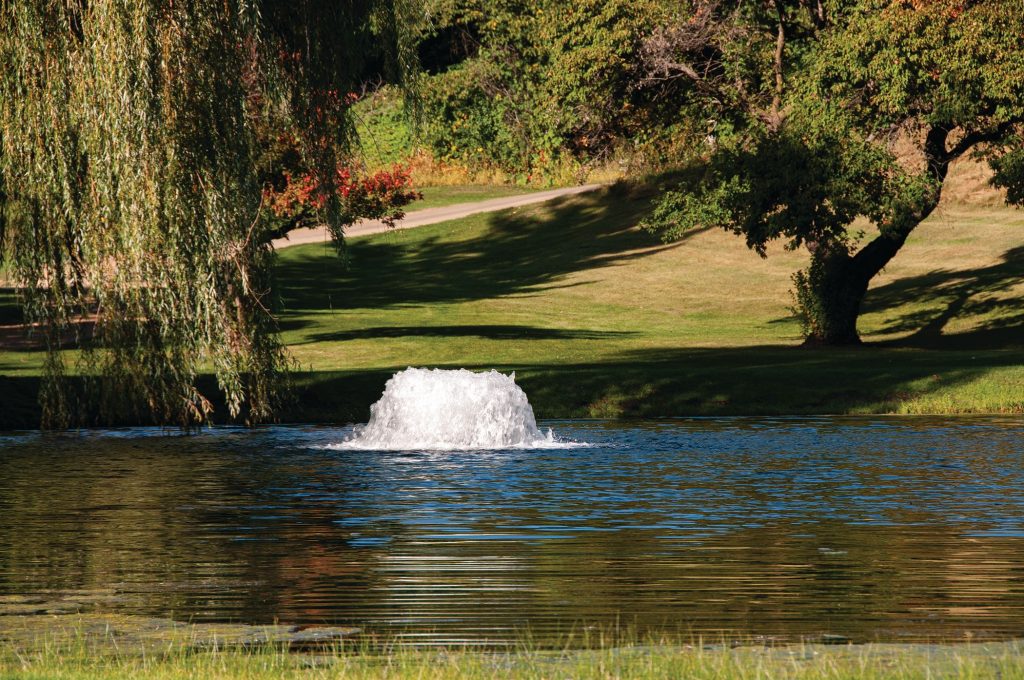
You get two wins from one purchase. Strong water movement runs through the day, and a lit display takes over at night. The pond stays healthier and looks the part all year. You can see the full pond fountain with lights package on the Fountain Tech site.
The reflecting pool is a warning sitting in plain view. Still water and summer sun will turn any pond green if nothing moves it. Add aeration before the heat arrives, and your pond stays clear while everyone else scrubs scum off the surface. Want help matching a fountain to your pond size? Reach out through the contact page and get set up before the next heat wave rolls in.
Do not wait for a green surface. The Pond Fountain With Lights keeps water moving by day and glows at night, with a 14000-gallon-per-hour pump and light kit for under 1000 dollars. See it on the Fountain Tech site.
Please see our pond fountain with lights here.
Frequently Asked Questions
How big a pump does my pond need?
Match the pump to your pond volume and aim to move the full volume within about two hours; i.e, if your pond is small (like a koi pond). If your pond is large, say one-quarter acre and larger, you don’t need to circulated the full volume nearly as often. Size up if the pond sits in full sun or holds a lot of fish.
How many hours a day should the fountain run?
Run it around the clock in summer. Oxygen bottoms out just before dawn, so the overnight hours matter most.
Can I run a floating fountain through winter?
In mild climates, you can. Where the pond freezes, switch to a bottom diffuser and store the floating unit before a hard freeze. Also, Scott fountains can remain in water even during icy weather.
How fast will a fountain clear water that is already green?
Aeration prevents better than it cures, so a bloom can take days or weeks to clear. Cut the nutrients too by easing off the fish food and blocking runoff.
Does a pond fountain use a lot of electricity?
It depends on the pump wattage, since the fountain runs day and night. Check the listed watts and compare that to how much water the pump moves.