

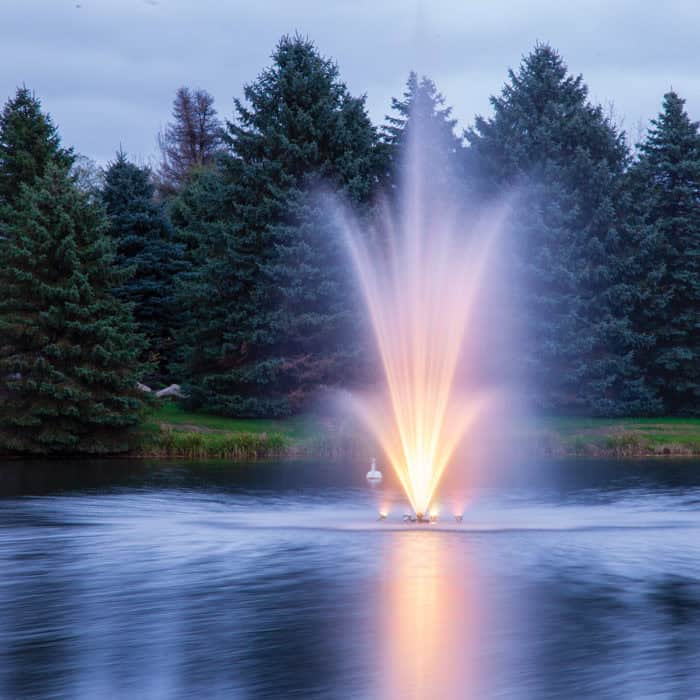
A backyard fountain looks great in daylight. After sundown, the same fountain can fade into a black hole if you skip the lights. That is why so many pond owners ask the same question. How many fountain lights are actually needed? The honest answer? It depends on a few things. Pond size, depth, fountain style, and the look you want. There is no single number that fits every setup. But there are practical ways to figure out what your water feature needs.
Start With the Size of Your Pond
Pond surface area is the first thing to measure. A small bowl-style fountain might need just one light. A larger pond with a tall spray could call for four or more fountain lights.
A rough starting point looks like this:
- Ponds under 100 square feet usually do well with 1 to 2 lights.
- Ponds between 100 and 500 square feet often need 3 to 4 lights.
- Ponds larger than 500 square feet may require 5 or more lights for proper coverage.
These numbers are not strict rules. A narrow, long pond might need fountain lights spaced differently than a round one of the same size.
Think About Depth and Spray Height
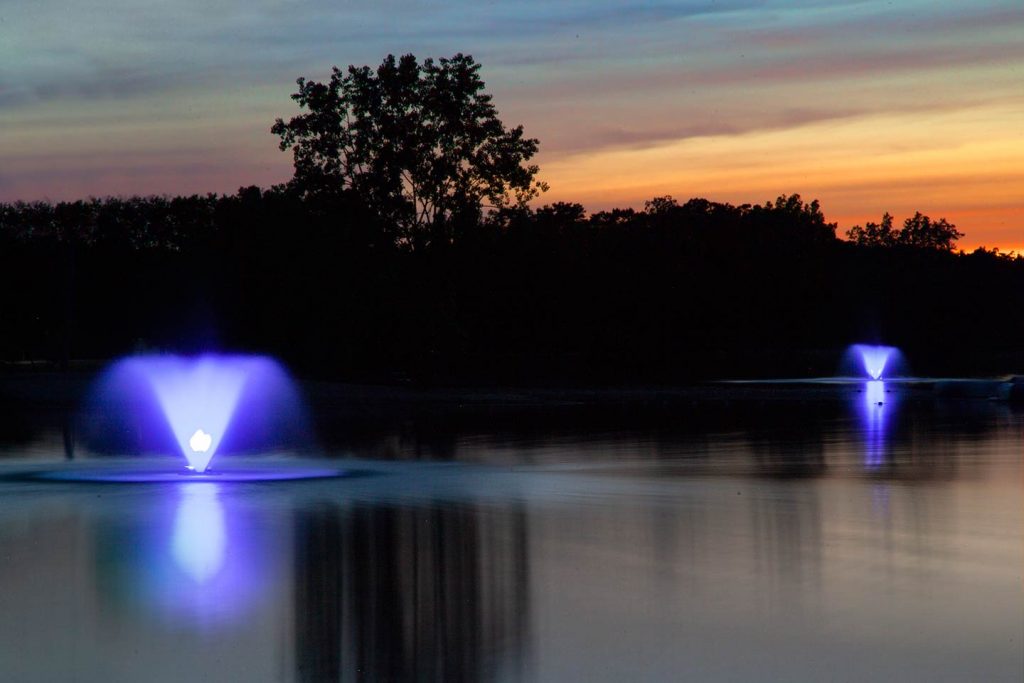
Depth changes the math. A deeper pond swallows light faster than a shallow one. Murky water makes the problem worse.
If your fountain throws water 4 feet into the air, a low-wattage light will barely reach the top of the spray. The water plume just looks dim. People expect drama at night, and a dull spray feels like a missed chance.
Tall fountains need lights with enough output to follow the fountain spray pattern. Short, bowl-shaped sprays work fine with smaller fountain lights placed close to the source.
Coverage Per Light
Most submersible pond lights cover a circle of water around 4 to 8 feet wide. The actual spread depends on lumens, beam angle, and how clear the water is.
A simple way to plan:
- Map out your pond on paper.
- Mark where the fountain sits
- Draw circles where each light would cast its glow.
- Look for dark gaps and adjust.
Dark gaps are where most pond owners go wrong. A pond with three fountain lights bunched together near the fountain leaves the edges in shadow. Shadows hide debris, algae buildup, and even fish you might want to see. Worse, a half-lit pond looks unfinished. Guests notice. Neighbors notice too.
Match Lights to the Fountain Type
Different fountains call for different lighting plans.
Floating Fountains
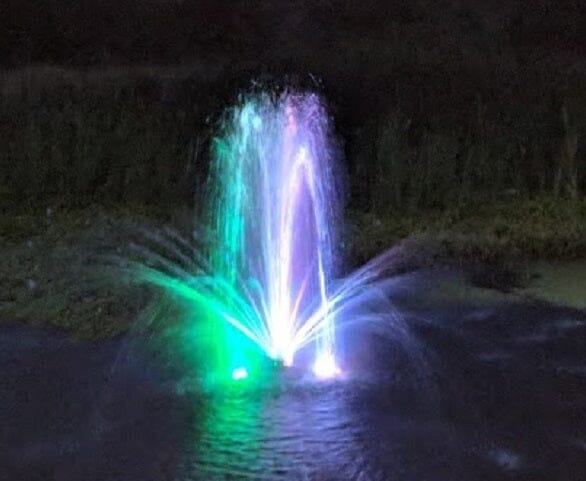
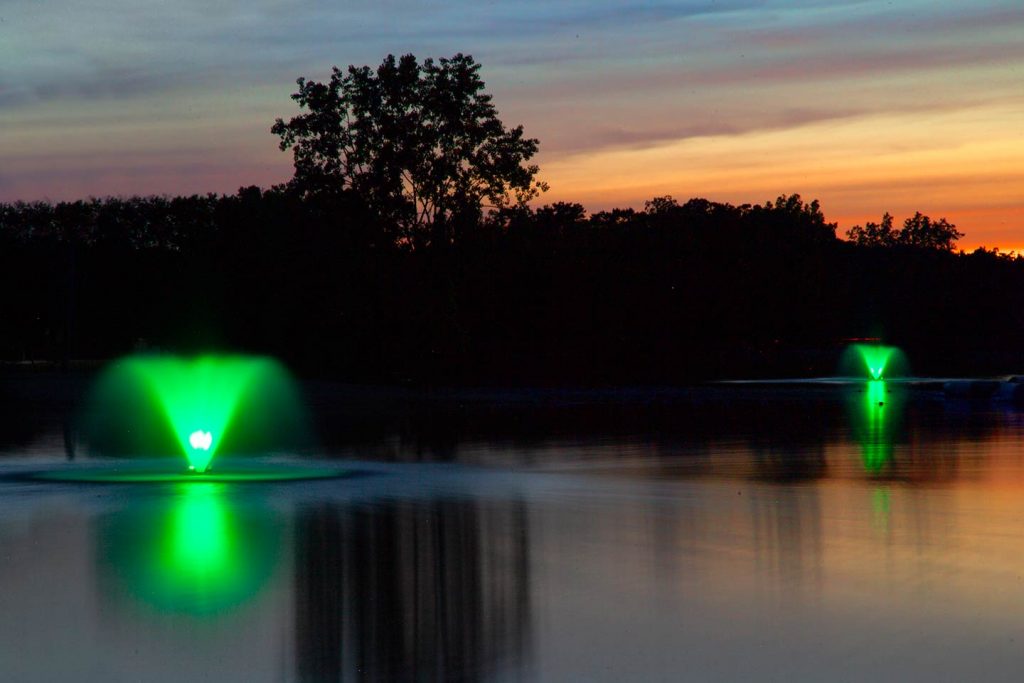
Floating fountains throw water in patterns above the surface. Lights mounted on the fountain float itself usually shine up through the spray. One built-in light might be enough for a small floater. Bigger floating fountains often come with multiple LED rings to cover the full spray pattern from below. Usually for up to one horsepower, two to three fixtures are enough. For fountains above one horsepower, four to six fixtures are often necessary. Of course, this recommendation comes with caveats. For one thing, horsepower ratings are all over the map. Some companies focus on input horsepower (which is not a good measure). Output horsepower is more accurate. What matters is net flow rate through the nozzle and total height and width of fountain display.
Spillway and Waterfall Fountains
Spillways and small waterfalls need fountain lights placed at the base where the water lands. One submerged light per spillway is a decent starting point. Wider waterfalls might need two or three across the drop zone to avoid uneven shadows.
Statue or Decorative Fountains
Garden statue fountains often look best with a single uplight aimed at the figure. A second light can highlight the water flow if the statue is tall. Going overboard here washes out the detail and makes the piece look flat.
Power Supply and Wattage
Wattage matters for two reasons. Brightness and what your transformer can handle.
Low-voltage outdoor lighting transformers come in fixed sizes. A 60-watt transformer cannot run six 20-watt lights. The math gets ugly fast. Plenty of pond owners learn this the hard way after burning out a unit. However, most manufacturers match the transformer to the total wattage of the light setup.
Before buying lights, check:
- The total wattage of all lights you plan to install
- The capacity of your transformer
- Whether the cable run is long enough to reach every fixture
Leave room for future additions. A transformer running at full load shortens its life. Aim for around 80 percent of the rated capacity. Transformers can be overpowered. No problem. But underpowering will cause them to heat up and sustain damage, if they work at all.
Ambiance Versus Full Illumination
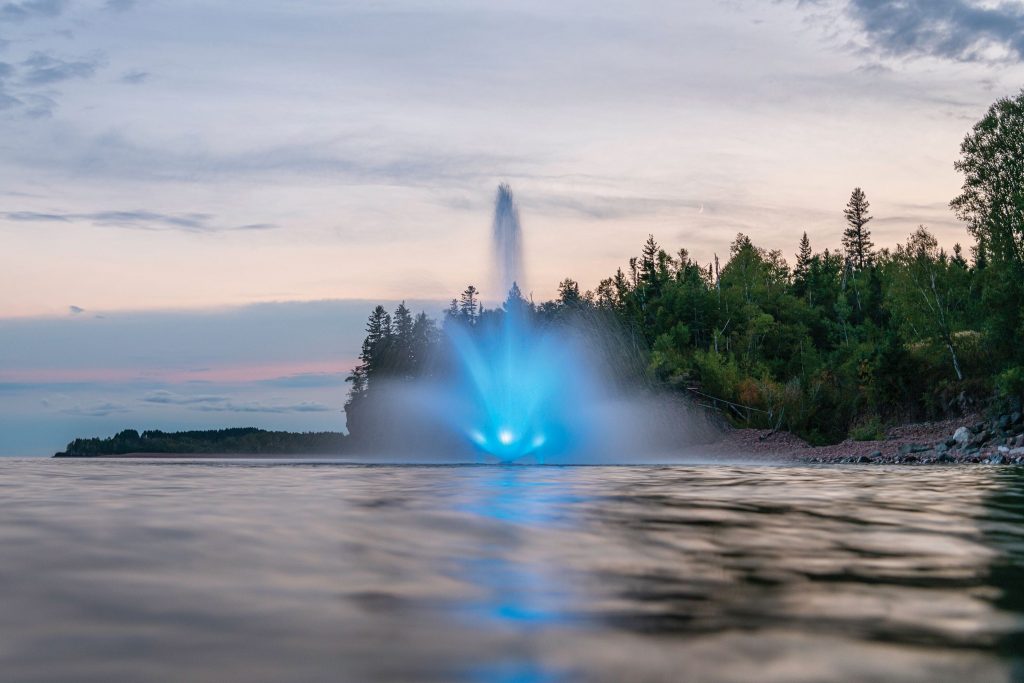
What look are you after? This question changes everything.
Some owners want a soft glow. A single warm light under a fountain can do that. The rest of the pond stays in moonlight, which feels calm and natural.
Others want the pond to be the focal point of the yard at night. That means more lights, brighter output, and possibly color-changing options. A bright pond pulls attention from across the lawn. It also shows off fish, plants, and spray detail.
There is no wrong answer. But picking the wrong number of lights for your goal leads to regret. Too few feels dark and unsafe. Too many washes out the magic and runs up the electric bill.
Safety and Visibility
Pond edges are slippery. Stepping stones get wet. Kids run around. A pond hidden in darkness becomes a hazard for anyone walking past after dusk.
Lighting the perimeter with at least one or two well-placed fixtures cuts down on accidents. A pond with zero lights at night is something most insurance adjusters would frown at.
This is where some pond owners regret cutting corners. Saving money on lighting feels smart until someone trips. Then the math changes fast.
Common Mistakes to Avoid
A few patterns come up over and over:
- Buying lights that are too dim for the spray height
- Skipping perimeter lighting and only lighting the center
- Forgetting to check transformer capacity before adding fixtures
- Using warm white where cool white would work better, or the other way around
- Ignoring the angle of the lights, which causes glare from common viewing spots
Each one of these chips away at the final look. Fix them upfront, and the pond turns into something the household actually uses after dark.
A Practical Starting Point
For most backyard ponds, three lights are a safe baseline. One under or near the fountain. Two more are spaced around the pond to fill in the dark spots. Adjust from there based on what your eye tells you on the first night the lights go on.
Some adjustments will be obvious. A corner stays too dark. A spray plume looks dim. The reflection off the back wall is too harsh. Move things, swap a fixture, or add one more light. The right number is the one that makes the pond look the way you want it to look.
Want your water feature to look its best after dark? Browse dependable fountain lights and pond accessories built to handle outdoor conditions, and get the right setup for a pond that shines all year.
Frequently Asked Questions
Can I leave fountain lights on all night?
Most LED fountain lights are built for long run times and use very little power, so running them all night is fine. If you want to save energy, a timer or photocell sensor can switch them off automatically a few hours after sunset.
Do fountain lights need to be fully submerged to work?
Submersible fountain lights are sometimes designed to sit underwater and can overheat or crack if used dry. Some models work both above and below the waterline (for example, our Fountain Tech lights) but always check the IP rating before installing. An IP68 rating means the light can stay underwater long term.
Will fountain lights harm my fish?
Fish generally adjust well to soft lighting, but bright or constant light can stress them and disrupt their sleep cycle. Stick to lower wattages, avoid pointing lights directly at hiding spots, and give fish a few hours of full darkness each night.
What color temperature works best for pond lighting?
Warm white (around 2700K to 3000K) gives a softer, candle-like glow that suits most backyard ponds. Cool white (5000K and up) makes water look crisp and bright but can feel harsh. Color-changing RGB lights add flexibility if the mood changes by season or occasion.