

A pond that looks calm on the surface can be falling apart underneath. Green film creeping across the top, fish gasping near the edges, and a smell that gets worse every week. These are signs that something has gone wrong with the water’s ability to support life. Pond aeration is often the missing piece that nobody thinks about until the damage is already done.
Pond aeration is the process of introducing oxygen into a body of water, either by moving the surface or pushing air directly to the bottom. Without enough dissolved oxygen, bacteria that break down organic matter slow down. Waste accumulates, nutrients build up, and algae take over. The water becomes stagnant in the truest sense of the word.
Most pond owners don’t think about pond aeration until something goes visibly wrong. A fish kill after a hot stretch of weather. A thick blanket of duckweed that won’t clear out no matter what you try. By then, the water chemistry has already shifted, and fixing it takes more time and money than preventing the problem would have cost in the first place.
Oxygen and the Invisible Food Chain
Every pond runs on oxygen. Fish need it to breathe. Beneficial bacteria need it to decompose leaves, fish waste, and dead algae sitting on the bottom. When dissolved oxygen levels drop below four milligrams per liter, that decomposition process slows or stops entirely. Organic material piles up, releasing gases like hydrogen sulfide, which is what gives neglected ponds that rotten egg smell nobody wants drifting across their yard.
Warm water holds less oxygen than cold water, and that single fact explains why summer creates the biggest risk window for any pond. The surface heats up, oxygen content falls, and the bottom of the pond turns into a dead zone. Fish crowd near the top or near any moving water they can find. If conditions hold like that for a few days, a sudden overnight temperature swing can trigger a full die-off.
Where the Air Actually Needs to Go

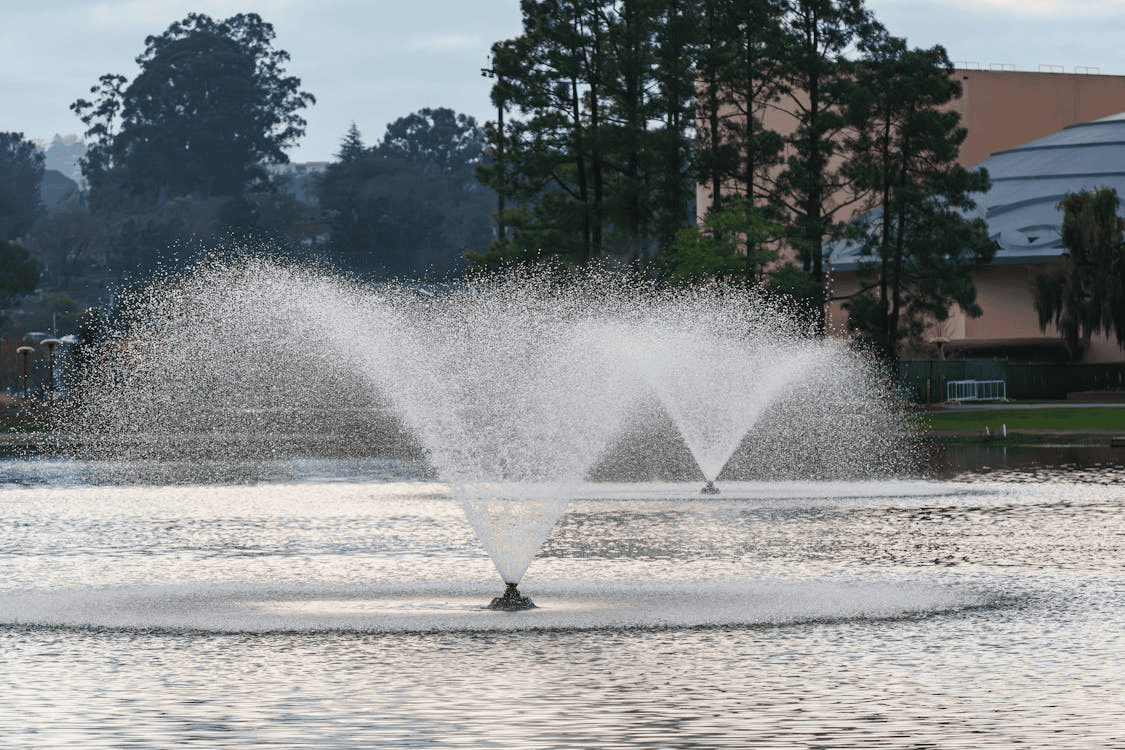
Surface agitation helps, but it only oxygenates the top few inches of water. Pond fountains, though, oxygenate down to six or seven feet. For ponds deeper than that, bottom aeration is needed. Thermal stratification locks warm water above and cold, oxygen-starved water below. That bottom layer turns anaerobic, meaning bacteria down there produce methane and other toxic byproducts instead of breaking waste down the way they should.
Bottom diffused systems work by pumping air through tubing to a diffuser plate sitting on the pond floor. The rising bubbles drag cold water upward and push warm water outward across the surface. This circulation breaks the thermal layers apart and distributes oxygen throughout the entire water column. For deeper ponds, this approach does what surface units simply cannot reach down far enough to accomplish on their own.
Matching the System to Your Water

Pond aeration improves water quality, prevents algae growth, and keeps fish healthy with the right circulation system. Picking the right setup depends on a handful of practical details. Pond size, depth, shape, and what you are trying to accomplish all factor into the decision. A small decorative garden pond and a half-acre stock pond need completely different equipment. Getting the wrong size creates a false sense of security because the unit runs all day long but never actually moves enough water to change anything.
Here are some general guidelines worth keeping in mind.
- Ponds under seven feet deep usually do well with a surface aerator or a fountain that keeps the top layer circulating and breaking up stagnation.
- Ponds deeper than seven feet, on average, benefit from a bottom diffused aerator that can turn over the full water column from floor to surface.
- Large or irregularly shaped ponds may need multiple diffuser plates spaced out across the bottom to avoid creating dead spots that still lack oxygen.
- Solar powered units work for remote locations without electrical access, though they only operate during daylight hours and may fall short during overnight periods when oxygen demand peaks.
- For those with deep ponds who still want a display, a combination of surface aeration and bottom aeration is the preferred option.
Seasonal Shifts You Cannot Afford to Ignore

Running an aerator only during the summer months misses half the picture. Fall turnover happens when the surface cools down and sinks, stirring up all the muck and trapped gases that built up on the bottom over the warm season. Without aeration running during that transition, the turnover dumps toxins into the water column all at once. Fish kills in October and November often trace back to this exact chain of events.
Winter carries its own set of risks, especially for ponds that freeze over completely. Ice seals off the surface and traps gases underneath with no way for them to escape. A small opening kept clear by a running aerator or a de-icer allows gas exchange to continue through the coldest months. Shutting everything down for the season and hoping for the best is a gamble, and it does not always work out. Also, Scott fountains do not need to be removed during icy winters and will cut a hole in the top layer of the pond through the ice.
The Breath Your Pond Cannot Take on Its Own

A well-aerated pond does not demand constant emergency interventions or expensive treatments. The water stays clearer, the fish stay healthier, and the bottom stays cleaner with far less effort over time. Ignoring aeration means reacting to problems after they show up, and by that point, you are always playing catch-up. Putting the right system in place means preventing those problems from arriving at all. Take a closer look at reliable pond aeration systems and give your water what it needs to stay balanced through every season. Ready to restore your pond’s health? Explore high-quality pond systems and get expert guidance to ensure clean, oxygen-rich water year-round.
Frequently Asked Questions
How do I know if my pond needs aeration?
If you notice recurring algae blooms, fish gasping at the surface, or a foul smell coming from the water, your pond likely lacks adequate oxygen levels and would benefit from an aeration system.
Can I run a pond aerator all year long?
Yes. Running your aerator through all four seasons helps maintain stable oxygen levels and prevents dangerous gas buildup under winter ice.
What is the difference between a fountain and an aerator?
A fountain moves water at the surface for visual appeal and provides some oxygen transfer, though only about half as much a surface aerator, which has some but little visual display. A bottom diffused aerator circulates the entire water column from the pond floor upward and is optimal for ponds with an average depth greater than seven feet.
How deep does my pond need to be for a bottom aerator?
Bottom diffused systems work best in ponds at least six to seven feet deep, where thermal layering tends to trap low-oxygen water near the bottom that surface units cannot reach.
Faetured Image Source: https://images.pexels.com/photos/35279443/pexels-photo-35279443.jpeg